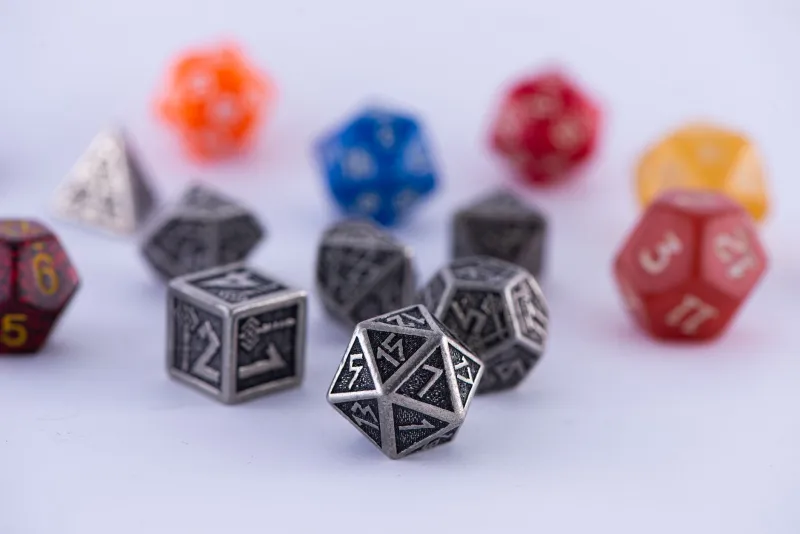
Build the Basement Before the House: The Case for Invisible Worldbuilding
Here's an opinion that gets me side-eye at conventions: most GMs spend their worldbuilding time on exactly the wrong things.
They draft gorgeous regional maps, name every king in the current dynasty, and write pantheons with full organizational charts. And then the campaign starts, and the players beeline toward a fishing village the GM improvised on the spot, and all that beautiful material sits in a Google Doc like a wedding registry nobody used.
I'm not here to dunk on prep. I'm here to argue that the most powerful worldbuilding you'll ever do is the kind your players will never directly see.
The Iceberg, Explained Badly at Parties
Writers have borrowed Ernest Hemingway's iceberg theory for decades: the dignity of a story's movement comes from the unseen part beneath the surface. Hemingway was talking about omitting things deliberately — the war trauma, the dead child, the whole backstory — so that what remains on the page carries the weight of everything cut.
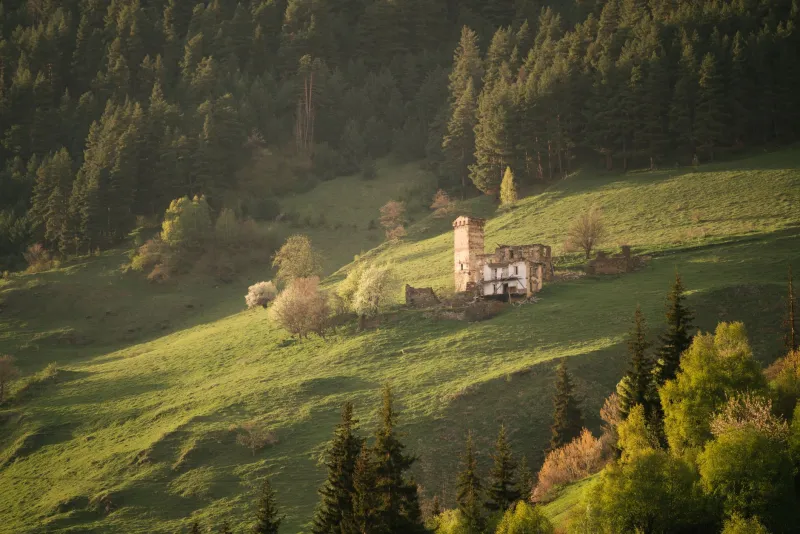
Campaign settings work identically, except your "readers" are four people eating pizza and rolling advantage. When a fantasy world feels alive to players, it's almost never because of what you showed them. It's because of what they sensed underneath. The ruined watchtower isn't cool because of the skeleton inside. It's cool because someone built it, garrisoned it, and then something ended — and the players can feel the shape of that absence without knowing a single detail.
Unseen history is why players ask questions. Questions are engagement. Engagement is the whole game.
What Invisible History Actually Does
Let's get concrete, because "add depth" is the kind of advice that evaporates on contact with a Tuesday night.
It makes the map lie convincingly. If your world has seven historical wars, borders don't look like neat lines — they look like scar tissue. Towns change hands. A river valley is half old-noble estates, half new-march forts. Players don't need to know which war did what. They just notice the map looks lived in, the way a real map of the Balkans or the former Soviet Union does.
It gives NPCs opinions for free. This is my favorite practical payoff. Two villagers in a bar can disagree about a war that ended two hundred years ago, and suddenly your throwaway town has factions, accents, and grudges. You never wrote a scene; you wrote a past, and scenes generate themselves.
It makes ruins mean something. A dungeon is a hole with monsters. A dungeon that was a monastery, a fortress, a prison, and then a hermitage — in that order — is a story the players excavate with their feet. And here's the trick: you can decide the full sequence and only ever reveal fragments. The players find a fresco, a cell door, a hermit's journal. They'll assemble the timeline themselves and feel brilliant doing it.
It future-proofs your improvisation. When players go off-script — and they will, they always will — a deep history gives you material to pull from. Any random direction they wander has something underneath it, because you built the basement before the house.
The One-Afternoon Checklist
You do not need a 40,000-word Silmarillion. You need an afternoon and this list. Write one to two sentences per answer. That's it.
- Name three wars or catastrophes. Any scale. One ancient, one recent-ish, one still smoldering. Note who won, who remembers, and who's still angry.
- Pick one event nobody talks about. A famine, a purge, a failed colony. Your older NPCs change the subject. This one pays compound interest if you ever reveal it.
- Sketch two factions that used to matter. A knightly order, a trade league, a heretical church. Where are their symbols now? (Answer: everywhere, repurposed. Old symbols don't die; they become heraldry on tavern signs.)
- Decide what one ruin used to be. Just one. Give it a full biography in three sentences. Then never explain it — let players find two clues, max.
- Write one lie in your history books. The official story is wrong about something. Scholars repeat it. One NPC knows the truth. You now have a plot for whenever you need one.
- Date the roads. Seriously. Who built the major trade routes, and what did they connect that no longer exists? Roads outlive empires, and players travel roads constantly.
That's the whole worksheet. Six answers, maybe ninety minutes, and your setting has a past pressing up through the floorboards of every scene.
Let It Leak, Don't Pour
A warning from someone who has over-poured: don't dump this on players. The moment you explain the seven wars in a lore monologue, they become homework. Instead, leak. An old soldier's toast. A holiday nobody remembers the origin of. A border stone carved in a dead script. Two details per session, tops.
The goal isn't for players to learn your history. The goal is for them to suspect it — to feel that the world would go on without them, and that it was already old when they got here. That suspicion is what turns a map into a place.
So before your next session, skip the continent map. Name a war nobody won. Your players will never see it. They'll feel it in everything.