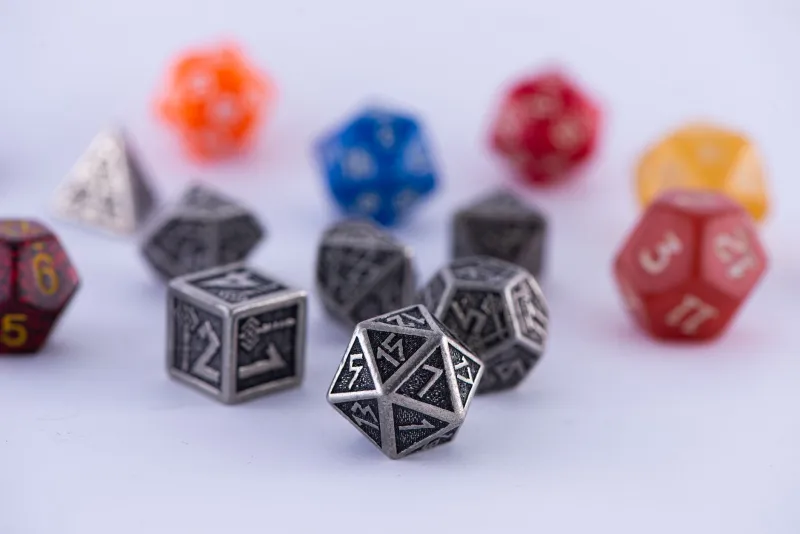
Stop Handing Out Stat Sticks: Five Homebrew Magic Items Built to Be Kept Forever
Ask any veteran GM about the saddest phrase in tabletop gaming and they'll tell you: "I sell it for 200 gold." You spent a weekend designing a magic item, and it lived for one session before a player traded it for a horse.
The problem usually isn't power. It's attachment. A +1 sword is a spreadsheet entry. The items players keep, name, and build characters around are the ones wired into the story — especially their own. Here's how to close that gap, plus five ready-to-run items to prove the point.
The Story-First Design Loop
Before you roll a single stat, answer three questions:
- Who made this, and why? An item forged by a grieving widow hits different than one stamped out of a dwarven factory line.
- What does it want? Items with a desire, grudge, or goal generate plot on their own. The item becomes a character, not equipment.
- What does it cost? A drawback or quirk isn't punishment — it's a hook. Cursed-adjacent items get roleplayed; clean items get sold.
Notice what's missing: numbers. Numbers come last, and they matter less than you think.
A Quick Balancing Formula
For system-agnostic homebrew, size an item's power by tier:
- Tier 1 (levels 1–4): One minor benefit + one flavor quirk. Roughly equal to a cantrip or a skill reroll.
- Tier 2 (levels 5–10): Two benefits, one of which scales with character level, plus a minor cost.
- Tier 3 (levels 11–16): One signature ability that changes how the player approaches problems, not just how hard they hit.
- Tier 4 (levels 17+): Reality-bending, but with a genuine price or a will of its own.
Rule of thumb: if an item's combat math beats a character's class features, it's a stat stick. If it opens new options, it's a keeper.
Five Items Built to Be Kept
1. The Ledger of Small Debts
A worn leather book that records every favor owed to its bearer. When the bearer helps someone, the book records the debt. Once per session, the bearer may "call a debt" to gain advantage on a Persuasion or Deception check against someone they've aided. Cost: the book also records debts the bearer owes — and NPCs sometimes call those in at the worst time.
2. Emberkin, the Reformed Arsonist's Torch
A brass torch that flickers blue when someone nearby lies. Once per day, the bearer can ignite an unattended object from 30 feet away with a snap of their fingers. Quirk: Emberkin hates wasted fire. Burn something carelessly and it sulks — going dark for a day and muttering via faint ghostly whispers.
3. The Second-Chance Stitch
A spool of grey thread that mends more than cloth. Tearing off a thread and tying it around a finger lets the bearer reroll one failed death save per long rest. The thread dissolves. Cost: each use visibly greys a streak of the bearer's hair. Permanent. Cosmetically devastating. Beloved.
4. Warden's Regret
A dented tower shield that hums when its bearer stands between an ally and danger. While wielding it, when an adjacent ally takes a hit, the bearer can use their reaction to become the target instead, gaining resistance to the damage. Once per long rest, the shield can instead shove the ally out of the attack entirely. Quirk: the shield was carried by a bodyguard who failed. It does not fail.
5. The Cartographer's Apology
A map that redraws itself in real time — except for one region, permanently smudged by a centuries-old ink spill. While traveling, the party always knows the safest route to a named destination. Hook: the smudged region doesn't render. Whatever's hiding there, the map's original maker died trying to apologize for it. That's not a bug. That's your next arc.
Tie Loot to Backstory — Cheap and Fast
You don't need a novel. Grab one noun from each player's backstory — a hometown, a mentor, a regret — and attach it to an item's origin. "Your father's compass" beats "a compass of finding" every single time, and it costs you one extra sentence of prep. When the item's story is the player's story, selling it stops being an option. It would be like selling a family photo.
The Real Test
Here's the metric that matters: at your next session's end, count how many of your homebrew items are still in the party's inventory — and how many players mentioned them unprompted. If an item survives three sessions and at least one argument about who gets to hold it, congratulations. You didn't make loot. You made a legend.