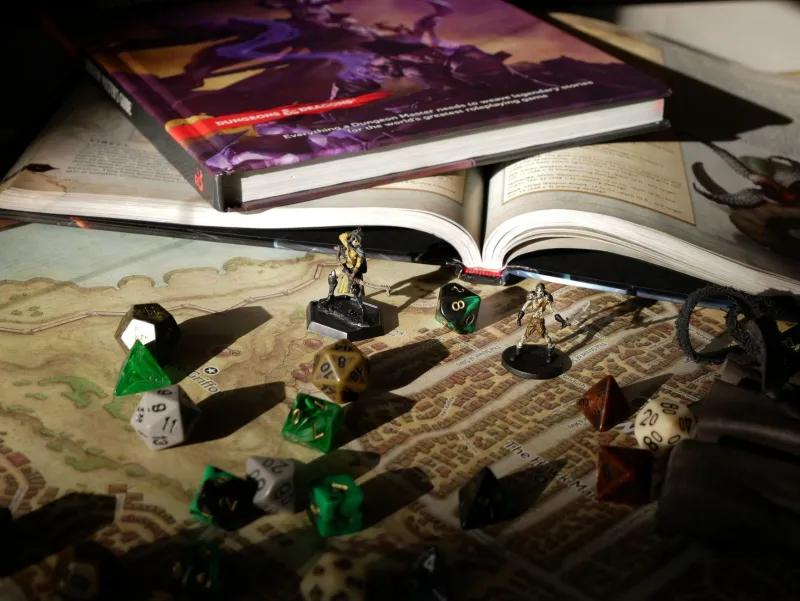
Roll It or Fudge It? Deciding Your Table's Dice Contract Before Campaign Start

Every GM has a story about a roll they wish never happened. Mine is a d20 that came up a natural 20 on a random encounter table, three sessions into a homebrew campaign, killing a level 2 wizard in a roadside ambush with a goblin's lucky javelin. No boss fight. No dramatic sacrifice. Just a goblin, a javelin, and forty minutes of silence while everyone processed what math had just done to our story.
Whether that roll should have stood is one of the oldest arguments in the hobby, and it's not going away. But the argument itself is often the problem. The real fix isn't picking a side — it's picking your side out loud, with your whole table, before the campaign starts. Call it a dice contract.
What the Dice Actually Promise
Here's the uncomfortable truth: dice at the table serve two masters. First, they generate genuine stakes — the feeling that anything can happen, which is the whole reason we don't just write novels at each other. Second, they act as a neutral referee, taking the weight of off-screen decisions off the GM so no one suspects favoritism.
When you fudge a roll, you spend the second promise to protect the first. When you honor every roll, the opposite. Neither is wrong. But if your players think they bought one deal and you're running another, that's when tables break.
So the question isn't "to fudge or not to fudge." It's "what did we all agree the dice mean here?"
Three Contracts You Can Sign
The Purist Contract. Every roll stands, openly, in the open. Player death is permanent and often meaningless in the narrative sense. Games like OSR dungeon crawls and a lot of Mothership play thrive here — the dice are the dungeon's teeth, and everyone knows it. The magic is that players make genuinely different decisions: they hire retainers, they run away, they treat a hallway like it can kill them, because it can.
The Director's Contract. The GM rolls privately and may adjust results in service of the story. This is the classic behind-the-screen style — think how most published adventure paths are implicitly written. The unspoken deal: trust me, and I'll make sure the story lands. It works when the table trusts the GM and fails spectacularly when they don't. Once a player suspects the dice are rigged, every victory feels participation-trophy-shaped.
The Transparent Hybrid. Rolls for random encounters, treasure, and minor skirmishes stand as rolled. Rolls that would end a character's story — or the campaign — get flagged in advance: "If this fight goes bad, I'm not pulling punches, but I will give you a death scene worth having." Some tables formalize this with hero points or fate tokens players can spend to reroll, which converts fudging from a GM secret into a shared resource.
The Case Studies Every GM Should Steal From
Ask around any convention floor — Gen Con, your local game store's open table night — and you'll hear both kinds of stories.
Saved by the fudge: A GM I know ran a two-year Pathfinder campaign where the final villain scored a crit on the party's healer in round two. He quietly rerolled it. The fight went the distance, the party won by a round, and nobody learned about the reroll until the wrap-up session — where he told them, and they voted unanimously that he'd done the right thing. The contract, revealed after the fact, matched what the players wanted anyway.
Saved by the roll: The reverse story: a party TPK'd to a dragon they'd been warned about three times. The GM let it happen. The players spent the next week building new characters obsessed with that dragon, and the revenge campaign that followed was the best arc that group ever ran. A fudge would have stolen that from them.
Sunk by ambiguity: The disaster case is always the same: the GM fudges secretly, players figure it out, and suddenly every roll is contested in the group chat. "Did the dice really say that?" Once that question exists, the dice stop doing their job as a neutral arbiter, and you're just reading improv with math set dressing.
Writing Your Dice Contract in Session Zero
You don't need a legal document. You need five minutes and three questions:
- Are rolls public or private? Not just player rolls — GM rolls too.
- Can characters die, and under what circumstances? Random goblin ambush vs. dramatic boss fight vs. never without player buy-in.
- Is there a safety valve? Fate points, inspiration rerolls, or a house rule that any death requires a player vote.
Write down whatever you agree on. Seriously — a sticky note in your GM notebook that says "open rolls, death needs buy-in, goblins get no crits" will save you an argument six months from now.
And revisit it. A dice contract that worked for a level 1 dungeon crawl might strangle a level 12 political thriller, or vice versa. The contract isn't a religion. It's a table agreement, and table agreements can be renegotiated like anything else.
The Roll You'll Remember
Back to my goblin. I let the roll stand, the wizard died, and the player rolled a war cleric whose entire personality became "never trusts a road again." She's still one of my favorite characters anyone's ever brought to my table. That's not an argument that the dice are always right — it's an argument that a table that knew the dice were always right produced a better story than one where nobody was sure.
Whatever you choose, choose it together. The dice don't need to be honest. The GM does.